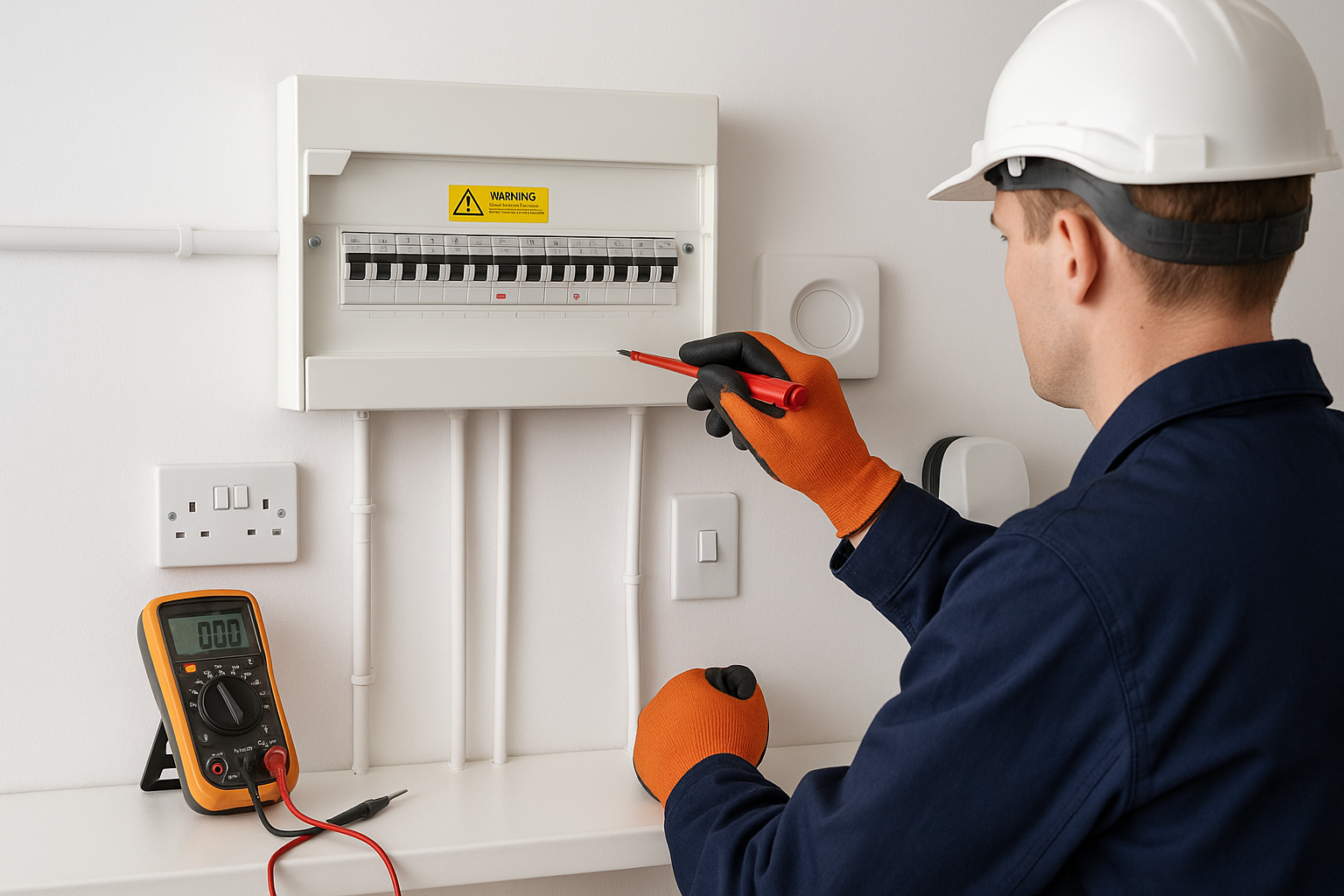
If you manage rental property in Bayswater, the fuse box is one of the first places electrical trouble shows up. A breaker that will not reset, a board that keeps tripping, or a hot or buzzing consumer unit can leave tenants without power and create an urgent safety concern. At Ampinex Wiriing & Lighting, we provide fuse box repair in Bayswater for landlords, property managers, homeowners and tenants who need the fault identified and dealt with properly.
We work across Bayswater and nearby areas including Paddington, Notting Hill, Queensway, Kensington and Maida Vale, supporting homes, flats, shops and offices near places such as Bayswater Station, Queensway Station, Kensington Gardens, Westbourne Grove and Porchester Centre. Whether the property is a Victorian terrace, a converted flat, an older rewire, or a modern apartment with a newer consumer unit, the first step is the same: find the fault safely, explain what is happening, and restore power only when it is safe to do so.
Common problems we see include fuse box keeps tripping, breaker will not reset, buzzing or hot fuse board, half the house has no power, and old fuse wire board concerns. Our service includes fuse box fault finding, tripping breaker investigation, RCD nuisance tripping, faulty breaker replacement and fuse board safety checks. If you need help now, call 020 3633 8358 or request a visit today.
For landlords and property managers, fuse box issues are not just inconvenient. They can affect tenant safety, access arrangements, repair records and the electrical condition information needed for compliance. If an electrical installation condition report (EICR) is due, or if a tenant has reported repeated tripping, the safest approach is to have the cause investigated rather than repeatedly resetting breakers without understanding why they are operating.
Fuse Box Fault Finding in Bayswater
Fuse box fault finding is the starting point when the consumer unit is causing loss of power, repeated trips or unexplained electrical problems in part of a property. In Bayswater, this often comes up in older buildings with a mix of original circuits and later alterations, especially where kitchens, lighting and socket circuits have been added or changed over time.
We begin by looking at the symptoms and the layout of the installation, then trace the circuit or equipment involved. That may include checking the consumer unit, identifying which breaker or RCD is operating, and determining whether the fault is with a fixed appliance, a socket circuit, lighting circuit, immersion heater, or a wiring issue hidden elsewhere in the property. In rental homes, this is particularly useful where tenants can only describe the problem as “the power keeps going off” or “half the flat has lost electricity”.
For landlords and property managers, accurate fault finding helps with records and authorisation. It is easier to explain the next step to an owner or tenant when the issue has been narrowed down to a specific circuit or component rather than treated as a general power failure. If the installation has an old fuse wire board or signs of overheating, we will flag the safety concern and discuss the practical repair or upgrade options available.
Where a property has recently had nuisance tripping after appliance use, we can also look at whether the issue is linked to overloading, a failing breaker, moisture ingress, damaged accessories, or an aged consumer unit that is no longer performing as expected.
Tripping Breaker Investigation in Bayswater
A breaker that trips is doing a protective job, but repeated tripping needs investigating. In Bayswater properties, a tripping breaker investigation often follows a tenant complaint, a power loss after cooking or laundry use, or a call from a property manager after a contractor has reported that the supply cannot be restored.
We check which circuit is affected and whether the breaker trips immediately, after a delay, or only when a particular appliance is used. That helps separate a circuit fault from an appliance fault. The issue may be as simple as a damaged socket, a loose connection, or a faulty appliance plug, or it may point to a more serious wiring defect that needs repair before the circuit can be safely used again.
In older Bayswater flats and converted houses, it is common to find a patchwork of older wiring and newer equipment. That can make breaker problems harder to interpret without proper testing. We use the fault symptoms, circuit history and the condition of the consumer unit to guide the investigation, then explain the next steps clearly so landlords can decide whether the repair should be completed immediately or scheduled with access arranged through the tenant.
If the breaker will not reset, keep the circuit isolated and avoid repeated attempts to force it back on. That can make the fault harder to diagnose and may increase the risk if there is a live wiring defect. A careful investigation is the safer route, especially where the fault affects a kitchen, hallway lighting, fire alarm supply, or another essential part of the property.
RCD Nuisance Tripping in Bayswater
RCD nuisance tripping can be frustrating for tenants and disruptive for landlords, but it usually means the device has detected a problem that needs attention. In Bayswater, we often see this in properties with modern appliances, bathroom circuits, outdoor lighting, or older wiring that has been altered over the years.
An RCD may trip because of moisture, a damaged appliance, a neutral fault, cumulative leakage from several items on the same circuit, or a wiring issue that only appears under load. The key is not to assume the RCD itself is defective without checking the installation and the connected equipment. In a property manager setting, that distinction matters because it affects authorisation, cost, and whether the issue is an immediate repair or part of a wider electrical condition problem.
Our approach is to identify what is causing the RCD to operate, then explain whether the likely cause sits in the consumer unit, a fixed circuit, or a plug-in appliance. If the property has an old fuse wire board or an ageing consumer unit, we may recommend a broader safety review because nuisance tripping can be a sign that the installation is no longer coping well with modern electrical demand.
For landlords, this also links to tenant access and records. If a tenant reports repeated RCD trips, it is sensible to log the complaint, arrange access promptly, and keep a note of the circuit findings and any advice given. That creates a clearer paper trail if further work is needed after the initial visit.
Faulty Breaker Replacement in Bayswater
If testing shows that a breaker is faulty, replacement may be the right solution. A breaker that will not reset, trips without an obvious load issue, or shows signs of wear can prevent a circuit from operating correctly. In some cases, the breaker itself is only part of the problem, so replacement should follow proper fault finding rather than being used as a guess.
We replace faulty breakers where appropriate and check the surrounding equipment for signs of heat damage, loose terminations or other issues that may have contributed to the failure. This matters in Bayswater homes and flats where consumer units may have been installed years apart, sometimes with later alterations made for kitchens, heating or lighting upgrades.
Landlords and property managers should also consider authorisation before any replacement work is arranged, especially if the issue affects a rented flat and the tenant is not the owner. We can work with the details provided by the landlord or managing agent and explain what has been found so decisions can be made quickly. If the work falls within notifiable categories under Part P of the Building Regulations, it should be handled and certified appropriately.
Where a breaker fault is linked to an ageing consumer unit, we may advise that a larger upgrade be considered rather than replacing one device at a time. That can be a more practical option for properties with ongoing electrical issues or where the board shows signs of age, heat stress or poor arrangement of circuits.
Fuse Board Safety Checks in Bayswater
Fuse board safety checks are useful when there is no immediate breakdown, but the property has a history of electrical problems, an older installation, or concerns raised during a landlord inspection. In Bayswater, this is especially relevant for Victorian terraces, converted flats, older rewires and mixed-use buildings where the electrical system may have been altered over time.
A safety check can help identify whether the consumer unit is suitable for the installation, whether there are signs of overheating or deterioration, and whether the circuit arrangement still makes sense for how the property is used today. For landlords, this can support better planning ahead of an EICR, tenant changeover, or refurbishment. It also helps property managers decide whether a reported issue is isolated or part of a wider pattern.
We can look at the condition of the fuse board, the accessibility of the unit, the clarity of circuit labelling, and whether there are obvious signs that further testing is needed. If a property has recurring electrical faults, a safety check can help determine whether the issue is likely to be one circuit, one appliance, or a broader consumer unit concern.
For rented property, keeping records matters. If access has been arranged with a tenant, note the date, the reported symptoms, the circuit affected and the advice given. That record can be useful for EICR follow-up, repair planning and communication with the owner or managing agent.
As a local electrical service, we support domestic and commercial customers across Bayswater and nearby locations, including Paddington, Notting Hill, Queensway, Kensington and Maida Vale. Recent work has included an emergency power loss callout in Maida Vale, a kitchen wiring inspection in Paddington after nuisance tripping, and support with a replacement light fitting in Notting Hill. Those jobs reflect the kind of practical, property-specific electrical issues we handle every day.
If your fuse box is causing trouble, do not keep resetting it without understanding the cause. Turn off any affected appliance if safe to do so, keep clear of damaged wiring or a hot board, and arrange a visit. For fuse box repair Bayswater, call 020 3633 8358 or email info@bayswater-electricians.co.uk. We are available 24 hours and can help you decide the safest next step for the property.
Ampinex Wiriing & Lighting operates from 96 Gloucester Mews W, London W2 6DY, United Kingdom and serves Bayswater and the surrounding area with fuse box fault finding, tripping breaker investigation, RCD nuisance tripping, faulty breaker replacement, fuse board safety checks, electrical repairs, consumer unit work, lighting installation, socket installation, electrical fault finding and domestic electrician support.